Closer.
If you’re not close enough don’t change your lens, change your heart.

When I first began making photography with my community (also the first & only photography I’ve ever made & continue to make) it was only natural & came naturally that the relationships, built from scratch between strangers were not secondary nor slave to the pictures.
I’ve never viewed a camera as a point of access, a VIP ticket that gives you permission nor admission for anything.
Simply stated, the camera is a device, a tool. A tool for making pictures. That’s it. So, when I began working on long form documentary stories within the town I live & with the people that reside there I was brand new to every aspect of a camera.
That innocence with the tool empowered me in other ways. It meant I could not rely on it to be anything else (nor would I ever wish to) other than a tool for making pictures.
It meant I couldn’t use it to create an illusion of power or control, of the gross trope of artist & subject, which I always found to be of great distaste.
It meant I had to be myself & build real relationships, not fleeting moments, lasting & true relationships built the same way as any real friendship is, with care & time, mutual sharing & mutual kindness.
As much as anyone new that I would meet & was willing to participate in a long form documentary, I in turn would share as much of myself back as they to I. That mutual sharing built two way trust, built real relationships, true friendships.
Doing so also completely made the camera disappear. Disappear in the sense that it wasn’t larger than the relationship. Point a candid camera at a stranger & you’ll most often find you get a different reaction than if you point a camera at a friend or loved one.
Why?, trust. I have never cared about the photos alone. It’s never a means to an end. Simply explained, I care about the people, who became my friends. What we’ve done & do together is the by-product of trust, time, care & compassion & it goes two ways, always has, always will.
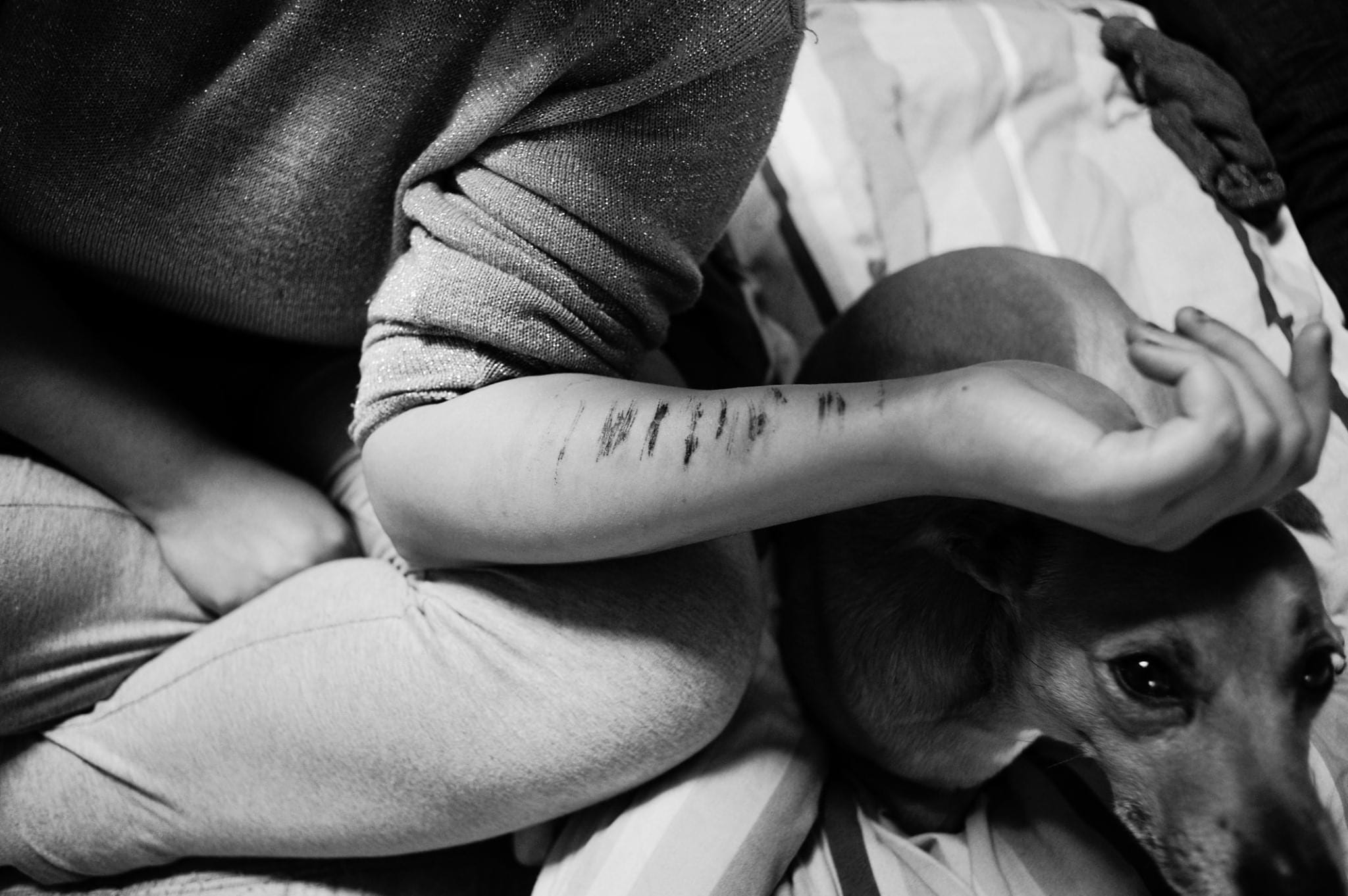
When Kirsty first asked me to document her self-harm I knew there was no possible way that she would be able to know that in my early 20’s I’d used the same method as a way of escaping stress, frustration & punishing myself for pain caused by others.
For me, the scars remained physically but they were mental events long in my past. For Kirsty the hurt was mentally & physically still haemorrhaging.
Self-harm isn’t about attention seeking. No one ever knew that I did it, nor did I want them to. For Kirsty it was the same. As we made pictures & made interviews I listened to the litany of abuses that had lead to her cycle of taking a blade to her skin & cutting. Kirsty didn’t want to share her turning to cutting for pity, she wanted to show other people that it was a bad solution to a worse situation, that ultimately it was a short term fix for long term pain. Kirsty, wanted to use her pain to help other people. Everyone I have ever worked with is the same.
That first afternoon of Kirsty showing me her freshly cut arm I instantly shared my experiences of the same, similar events. I wanted to… to say “Hey, you’re not alone… & you can stop, it takes time but you can, especially if, when, you realise that hurting yourself because someone else has hurt you is only hurting you more, even if you feel in that instant it’s a relief, lancing a boil, getting the poison out.” We shared a long talk. Talking & listening was the real fix, the real solution.
In those moments, we secured a bond, a friendship that’s lasted 16 years.
In that moment, I wasn’t thinking about being a photographer, I was just being myself & that’s exactly the mentality I then took to every photograph I have made since.
Over the years shared experiences & their sharing have been far more important than anything else. In truth I never think about ‘being’ a photographer, I think about how can a well made photograph serve the person, the story, the testimony & topic that’s contained within it.
When it comes to photography, be yourself, the rest, the photographic, will fall into place. Let it follow your lead, not you it’s.
A few months later Kirsty stopped self-harming.
Yes, there’s an emotional price to be paid for being deeply involved with the pain of others versus a casual, detached onlooker, it’s a price of admission. But that’s another story for another time.
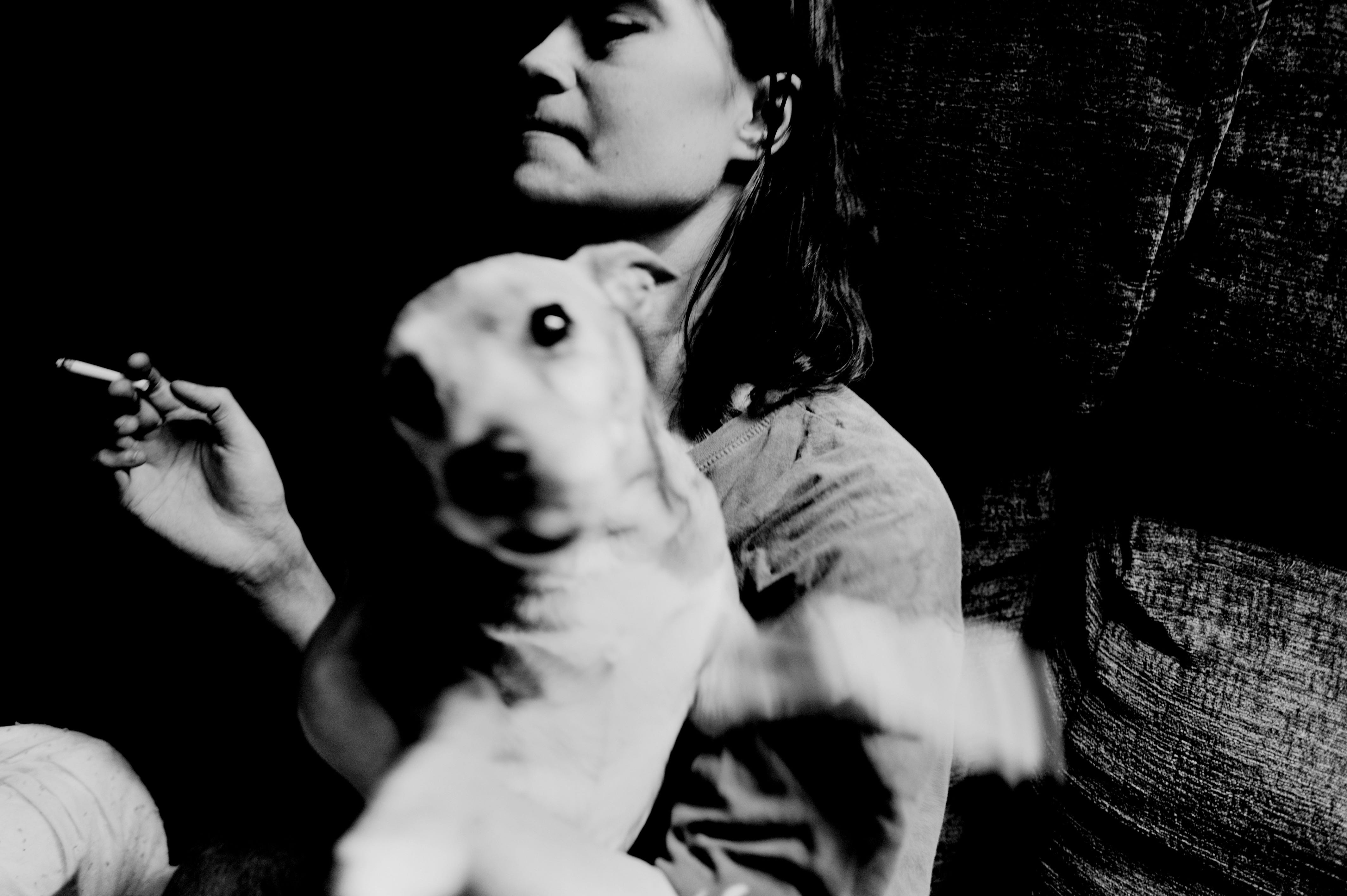
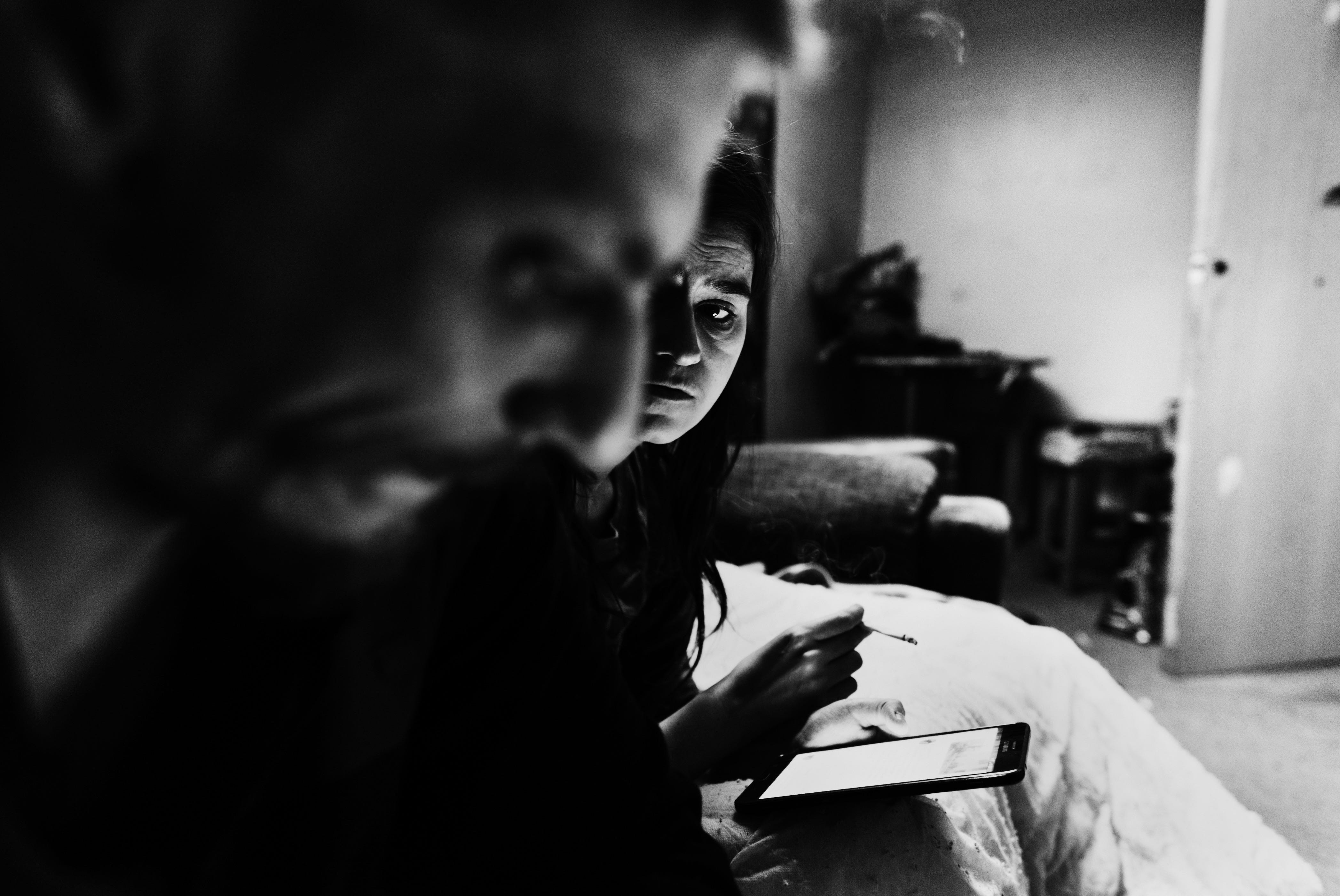
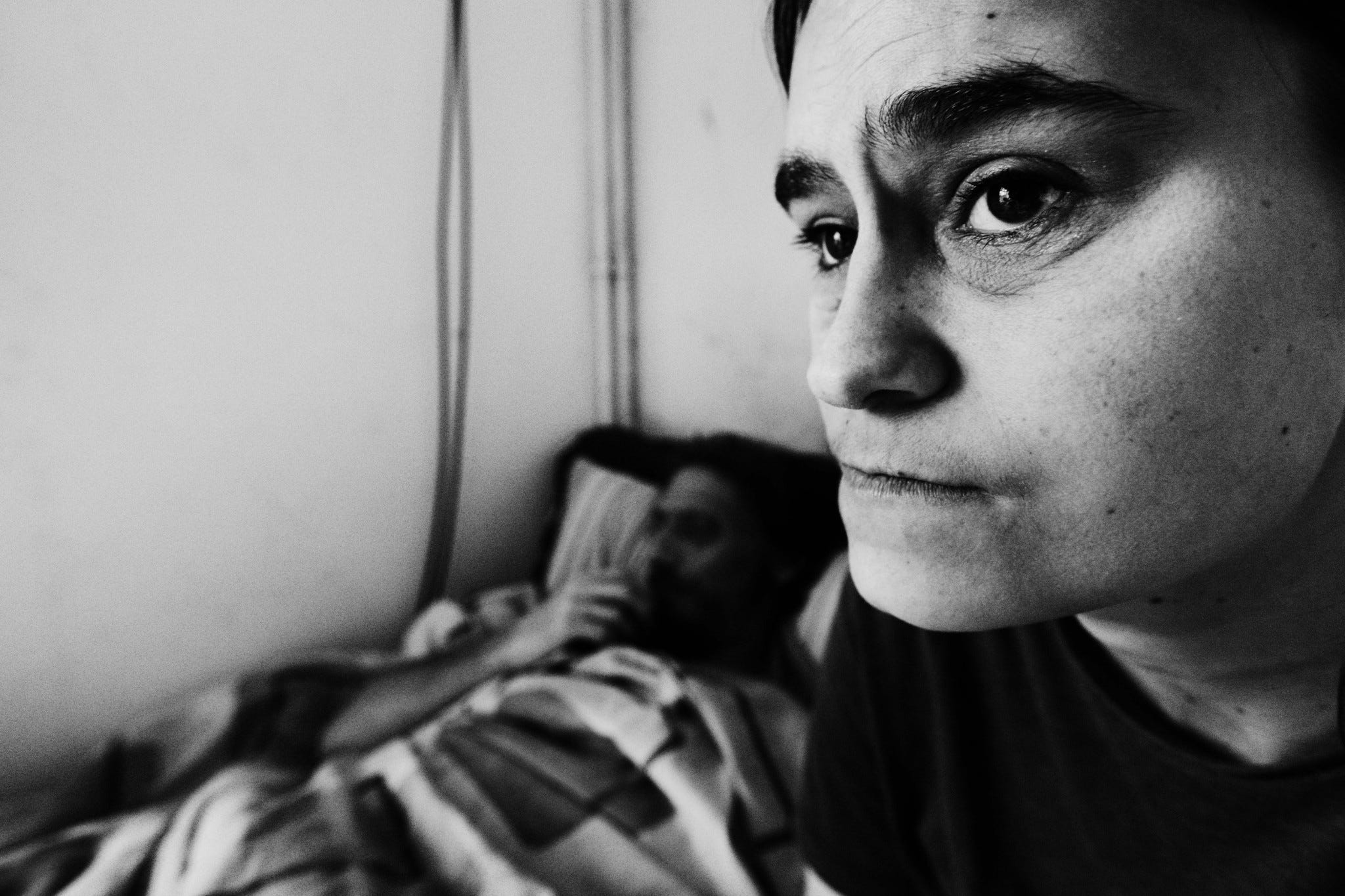
Kirsty & Bandit (RIP Bandit)
Kirsty & I.
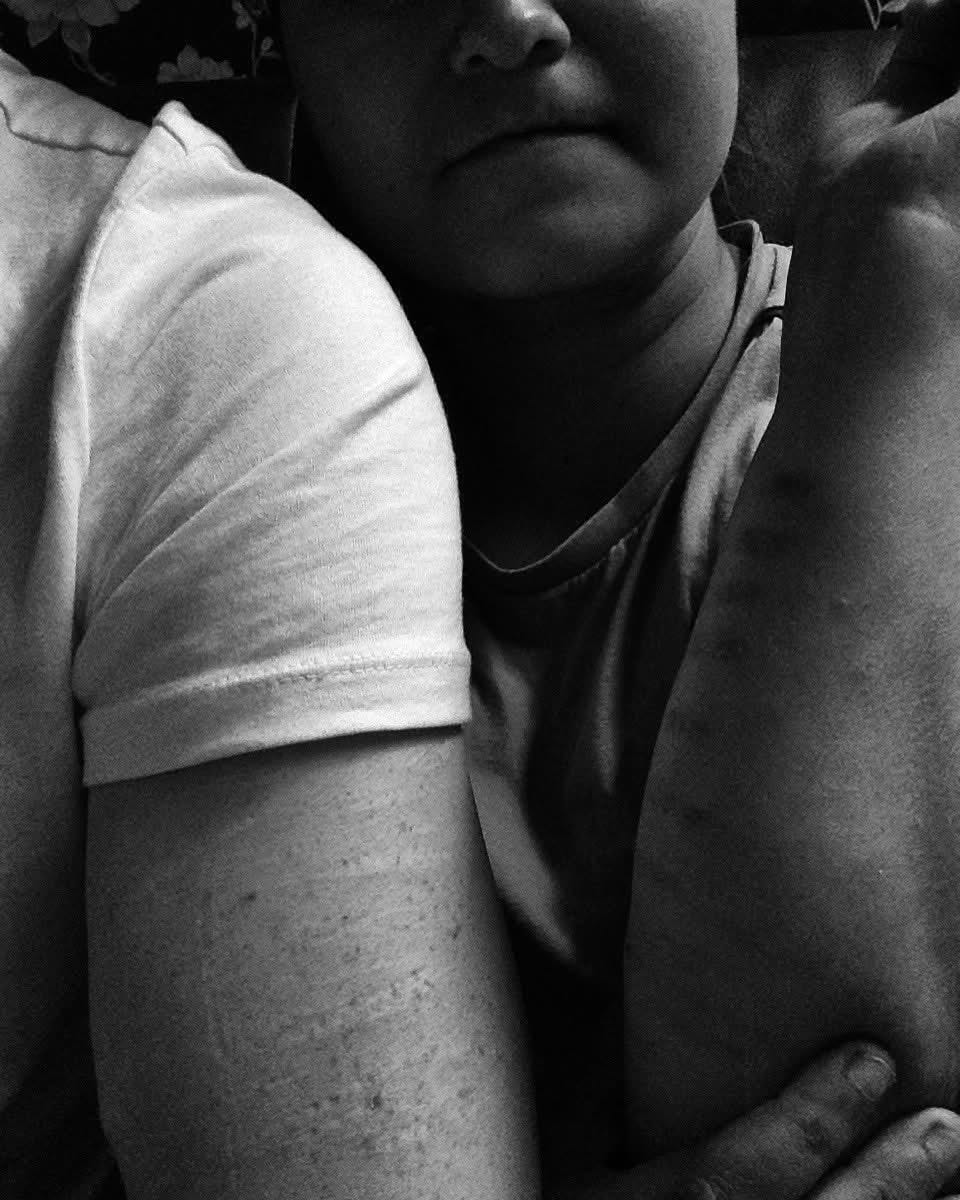
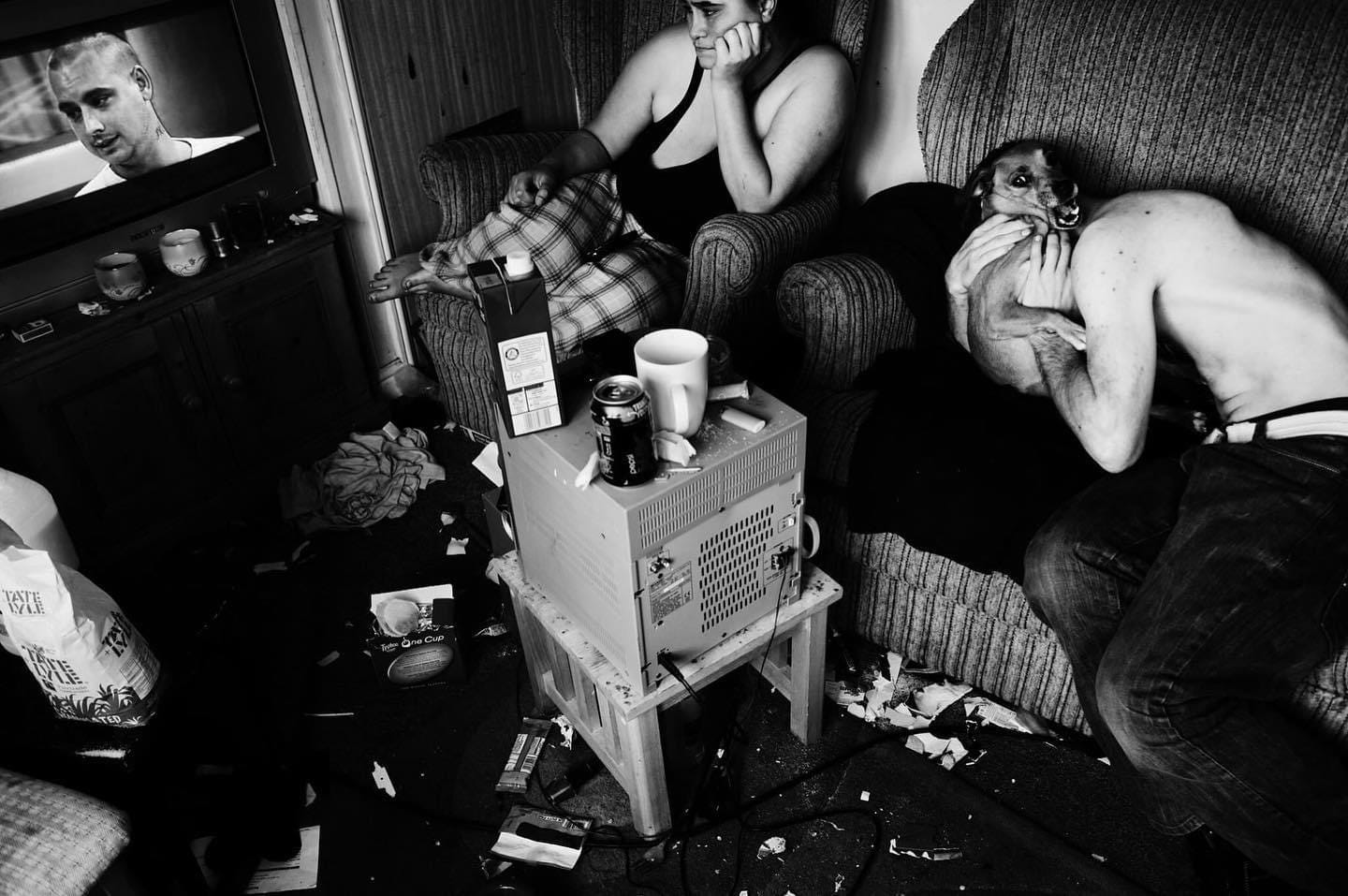
Pictures included within Vol 1 & 2 of SMALL TOWN INERTIA.
Thank you for sharing, documenting, and most of all -- helping people.
I too in my mid-20s resorted to cutting as a way to try punish myself for all that I felt that I wasn't. As you mentioned, it takes time, but it can be overcome.
Eventually, well after I healed, I found photography. It did not save me, but it has given me a chance and a reason to step outside of my own world -- my career and every day life -- to meet other people, hear their stories, and if I am lucky, make a photograph with them.
Thanks again for your work. I will be following along.