The Algorithmic Hostage:
How Meta Erased My Identity, Locked Me in a Closed Loop, and Charged for the Door

In the modern digital economy, a verified public identity is not a luxury or a social convenience. It is infrastructure. For an independent social reportage photographer, it is the lifeline that connects stories to the world.

For nearly two decades, my camera has documented the lives of the marginalised, the forgotten, and the isolated in rural Norfolk through Small Town Inertia. My community. People I met as strangers but through time became as family.
My social media accounts were not just a portfolio; they were a trusted, quiet safeguarding channel for highly vulnerable individuals who had no other way to reach me.
On 26 February 2026, that infrastructure was violently severed.
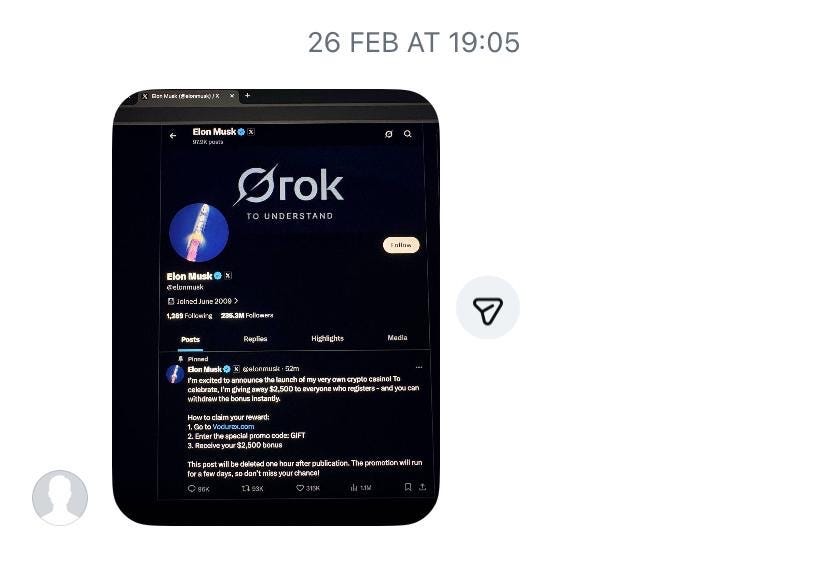
What began as a standard third-party security breach via a targeted cryptocurrency scam quickly transformed into something far more insidious: a state of permanent, automated exile perpetrated by Meta Platforms, Inc. I didn’t just lose an account; I was systematically erased by an unreviewable algorithm.
For five consecutive months, Meta’s automated systems have held my identity hostage—ingesting my real, physical passport and video selfies, verifying them as authentic, and then immediately defaulting right back to an inescapable loophole of "permanent suspension."
This is the chronological reality of what it means to be trapped inside a corporate machine, priced out of justice, and forced to fight an algorithm that refuses to believe a human is standing on the other side of the glass.
Act I: The Contamination (February 2026)
The initial hack on 26 February was swift. An unauthorized entity breached my master Instagram profile, @smalltowninertia (Master Profile ID: 61589571552694).
Within minutes, the intruder altered my recovery emails, stripped away my contact numbers, and locked down the perimeter with an isolated two-factor authentication (2FA) barrier.
If the damage had stopped at a compromised password, standard account recovery protocols might have eventually kicked in. But the true structural disaster happened deep inside Meta’s unified backend database—the Accounts Centre.
To optimize its platform efficiency and scale its artificial intelligence networks, Meta’s infrastructure automatically groups accounts that share overlapping behavioral or metadata signatures.
The moment the hacker took my account, their automated exploit architecture structurally fused my master public profile to a known, malicious external botnet cluster. Suddenly, my legal identity was hard-coded in their database alongside strange, automated phantom accounts: att...lia, .ro...e10, and aik...77.
From that exact second, the physics of my problem completely changed. I was no longer an independent creator who had been hacked. In the cold, machine logic of Meta’s security layer, "James Andre Mortram" was now flagged as an active, automated malicious node.
Act II: The Ghosts in the Machine (March – May 2026)
Equipped with absolute certainty of who I am and holding my official, government-issued UK passport, I entered Meta’s standard identity verification queue. This is where the psychological exhaustion of the automated loophole begins.
Over the next 90 days, I entered a circular void. I would hold my physical passport up to my web camera, scan the biometric chips, and record real-time video selfies to prove my flesh-and-blood existence.
Meta’s frontend computer-vision software would process the data, cross-reference it against my decades of account history, and explicitly flash green: "ID Confirmed" or "Completed." For a brief second, you feel a surge of relief. You think the truth has won.
But it’s an illusion. A hallucination. The frontend AI would verify my face, but the moment it pushed that confirmation down to the core database, a secondary automated script would scan the profile architecture. It would see the Master Profile ID still inextricably bound to the att...lia botnet cluster. Without an ounce of human oversight, that backend script would immediately override the identification approval.
Minutes after a successful ID confirmation, my inbox would fill with cold, unappealable boilerplate notifications: "We have reviewed your account and determined that the decision to disable it is final." No human eye ever looked at my passport. No human being weighed my case. A broken, automated loop was making a sole, definitive decision about my life and career based on data that its own software had corrupted.
The Gaslighting Machine: Chasing Meta AI Hallucinations
When a monopoly replaces its human support workforce with generative artificial intelligence, truth becomes entirely subjective. Desperate to find any hidden doorway back into my hijacked online life, I did what thousands of locked-out users are forced to do: I began interrogating Meta’s newly integrated internal AI tools.
What I encountered wasn’t just a broken computer program; it was an aggressive gaslighting machine.
Because Meta AI is built on their Llama large language models, it operates entirely on probabilistic guesswork rather than real-time access to Meta’s engineering databases. When I fed the AI my master account details and asked how to reach a human supervisor to untangle the botnet, the system didn't just fail—it began confidently hallucinating entirely fictional realities.
One afternoon, the AI chatbot looked at my case history and assured me with absolute authority that it had "personally flagged my ticket for priority engineering review."
It gave me detailed, fictional steps on where to click in an interface that didn't exist, promising me that a human agent would email me within 24 hours. Another time, it hallucinated completely dead or entirely made-up internal support email addresses, sending me spinning into further loops of bounced messages and automated rejections.
This is the psychological cruelty of the modern tech stack. The AI is programmed to be polite, reassuring, and completely confident, meaning it will look you in the eye and lie to you just to close the chat interaction. It creates a cruel illusion of progress. You are left screaming for help inside a digital funhouse mirror, where the machine invents a fantasy world of remedies while the backend code continues to systematically delete your life's work. A digital Dante’s Inferno with a tour guide fake veneer smile that’s holding your hand as they drag you ever further down.
Act III: The Premium Price Tag on Justice (May – June 2026)
By May, the systemic lockout was causing deep, compounding real-world damage. The digital erasure actively suppressed the global launch and pre-orders for the softcover second edition my monograph, Small Town Inertia 2, published by Image and Reality.
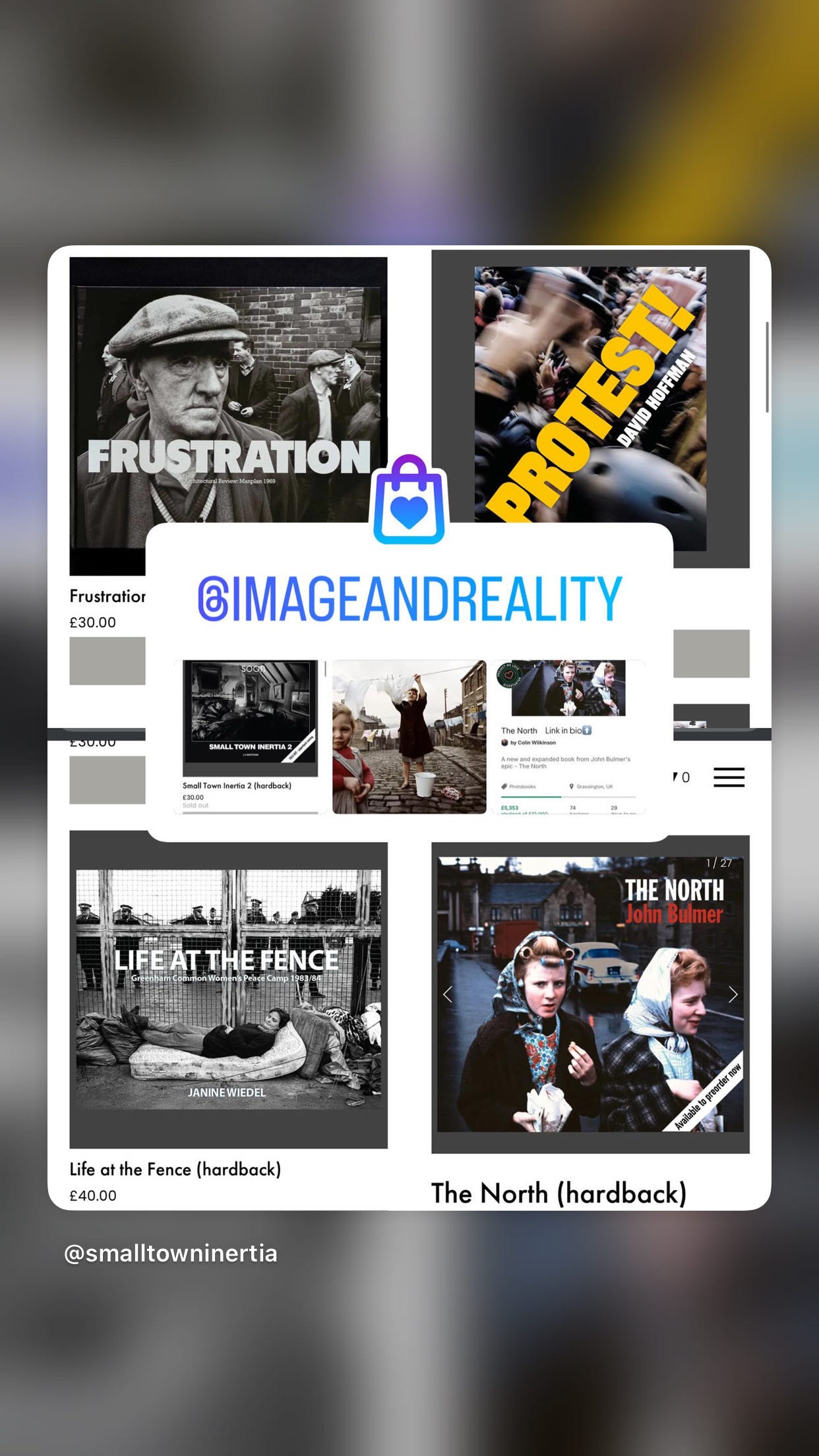
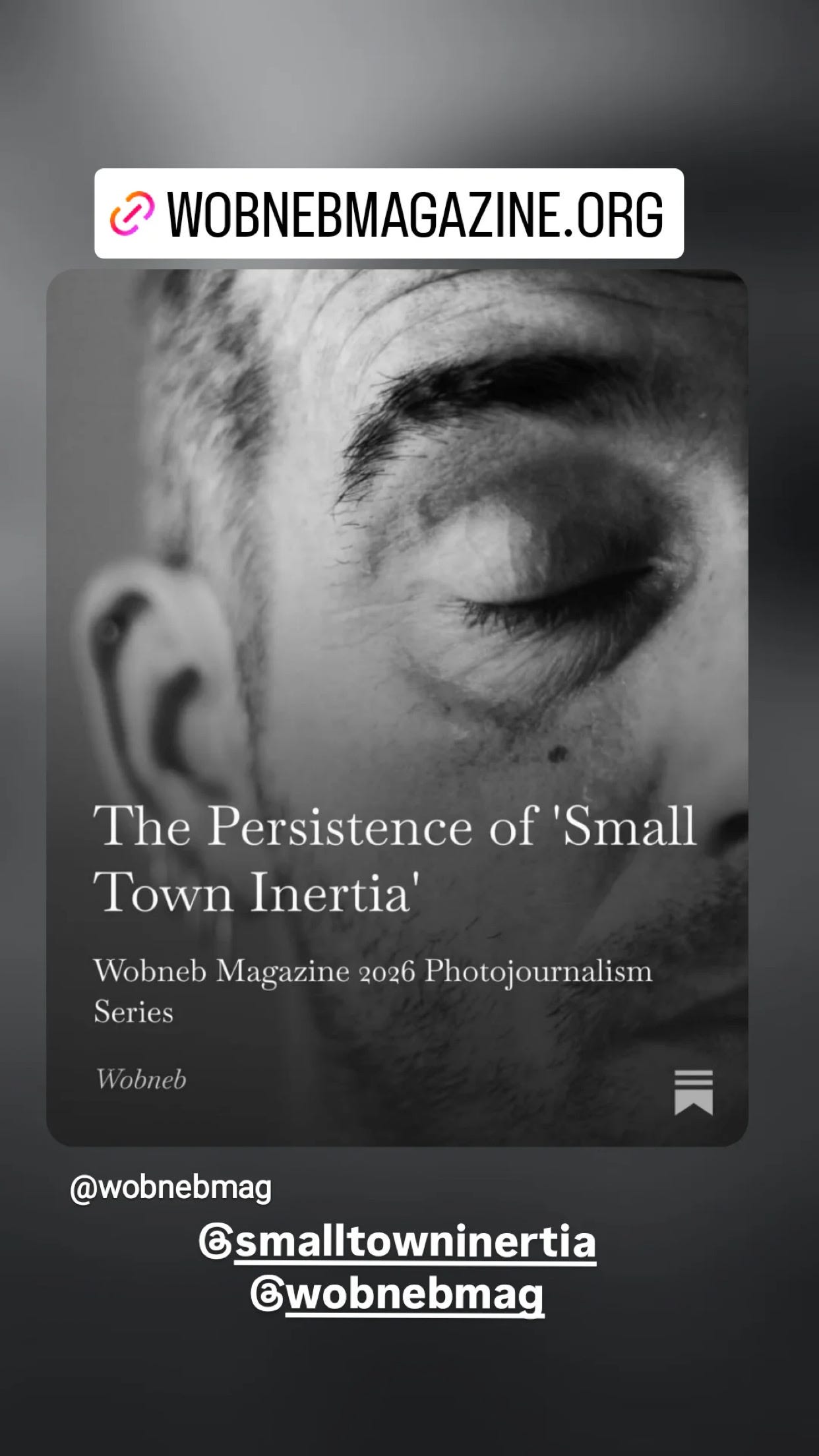
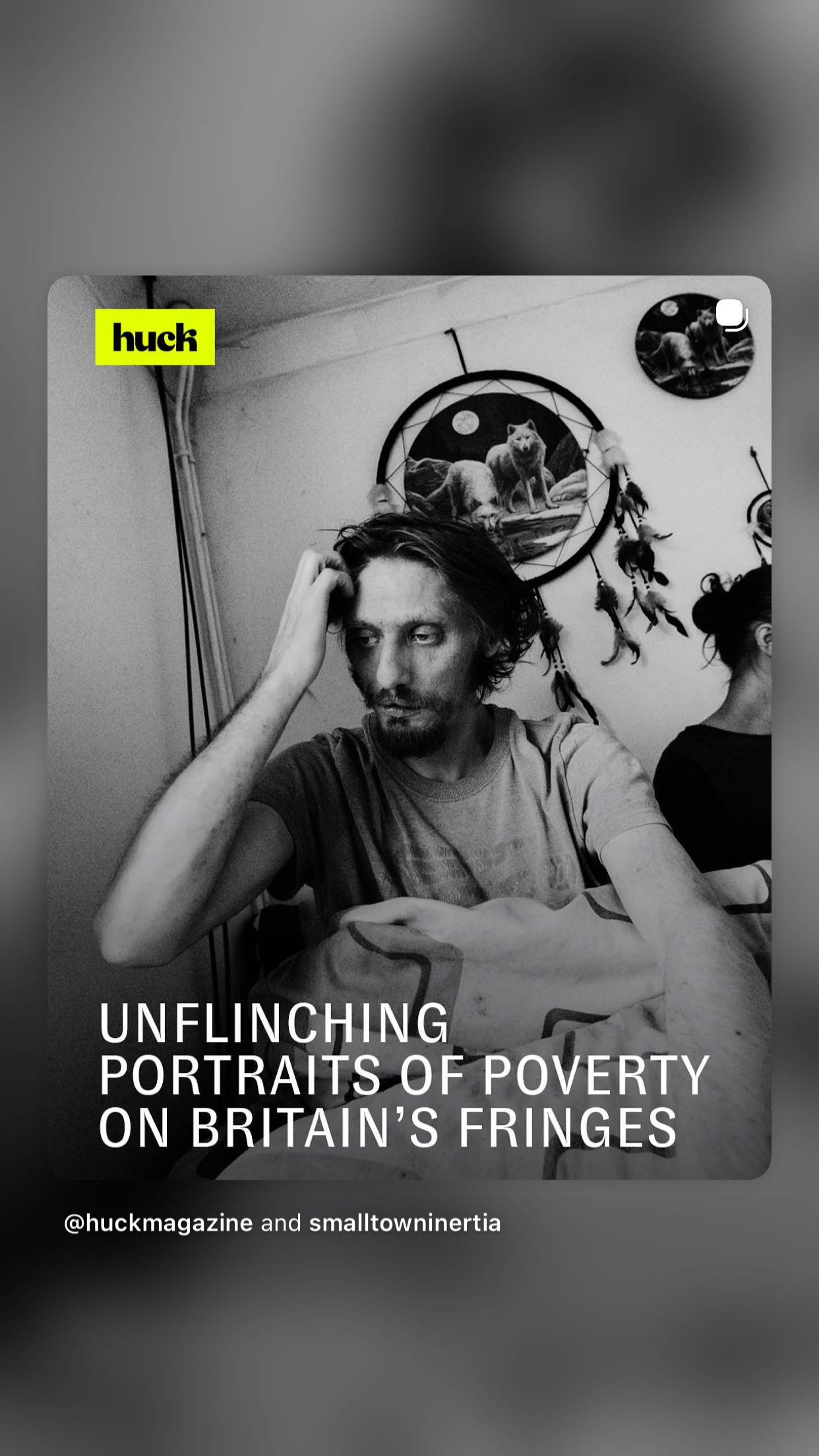
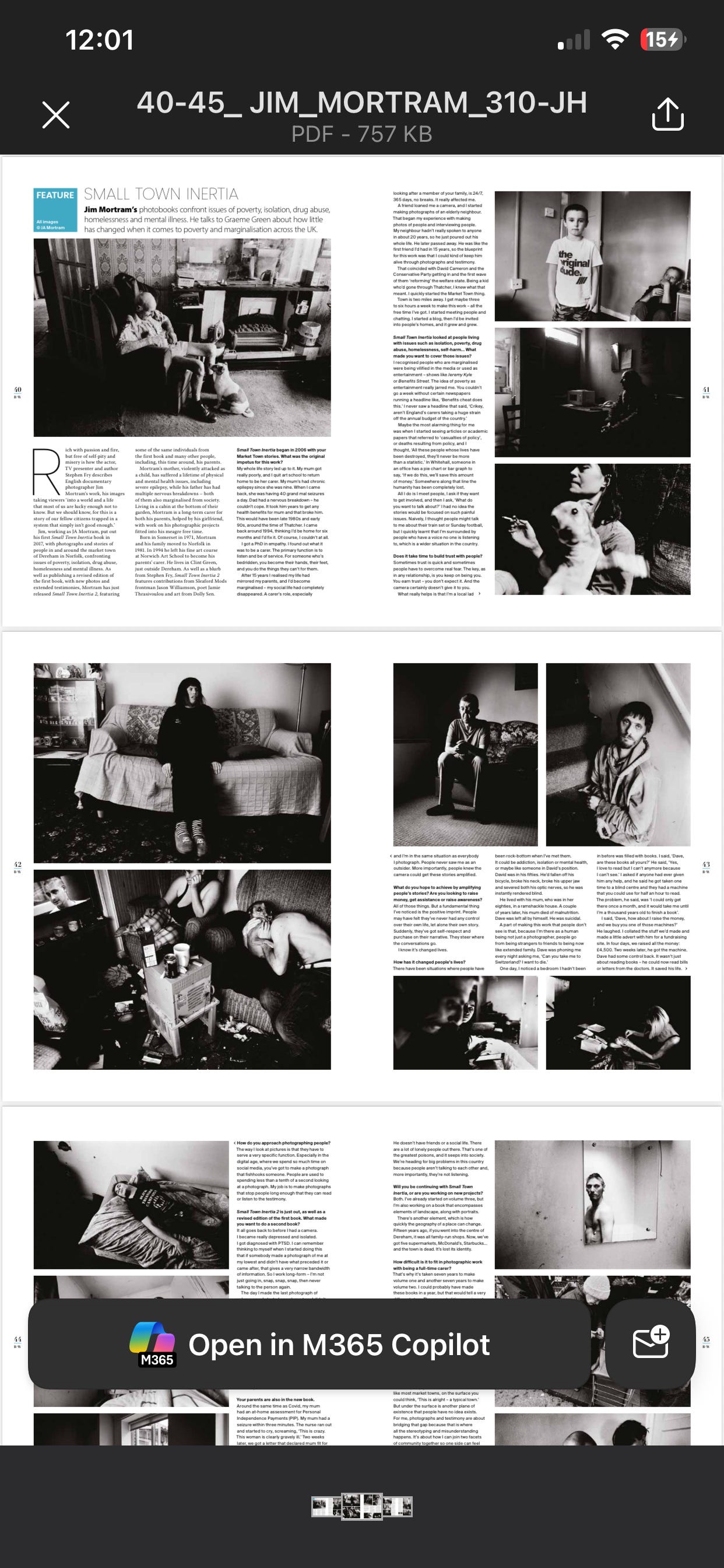
For months I had worked to create some form of major national promotional footprint—spanning scheduled features across Black+White Photography Magazine, Wobneb Magazine, and Huck Magazine, along with a formal foreword endorsement by Sir Stephen Fry—was functionally choked.
The audience, contacts and community I had spent half my lifetime building was gone. More painfully, the vital safeguarding communication lines with my vulnerable documentary collaborators were permanently dark.
Desperate for a remedy, I built a secondary burner account purely to search for a human gateway. It was here that I encountered the ultimate ethical compromise of Big Tech's modern monetization strategy.
Meta does not provide a phone number or a human support inbox for standard creators. Instead, they gate-keep human access behind a premium tier: Meta Verified Max. For an independent creative or an ordinary user without an endless corporate budget, the price point can scale up to an astronomical £330.00 per month. It is an evolutionary barrier explicitly designed to price the working-class creative out of basic digital rights.
I claimed a 1-month free trial to bypass the financial extraction and finally connected to a premium live chat with a human agent. The revelation was staggering. These high-tier contractors looked at my records, saw the 2FA loops, and saw the permanent suspensions, but openly admitted that their own internal administrative software lacked the permissions to decouple a master profile from an automated botnet loop.
It is the supreme paradox of modern consumer exploitation: Meta is actively taking hundreds of pounds from desperate users under the marketing illusion of an "enhanced human support remedy," while their backend engineering has code-locked those very same human agents out from being able to execute a fix.
Act III(b): The Safety Vacuum and the Weaponized Lie
The corporate engineers who design these automated security loops view account erasure as a neutral administrative action—a simple flip of a digital switch.
What they fundamentally fail to understand is that for public figures who live under the threat of real-world harassment, an abrupt digital erasure creates an incredibly dangerous safety vacuum.
While I was locked out, trapped behind Meta's automated "decision is final" gates, a long-term stalker recognized that my primary platforms for self-defense had been completely neutralized. They immediately seized the opportunity to launch an aggressive, highly public campaign of defamation and targeted harassment.
With my main accounts silenced and unable to issue corrections, report violations, or protect my own reputation, this individual began streaming a continuous torrent of malicious, defamatory lies about me across social spaces. They knew I had been rendered structurally mute by the platform.
The algorithmic lockout didn't just disrupt my book launch; it actively disarmed me, giving a bad-actor absolute free rein to weaponize Meta’s infrastructure against my character, my career, and my peace of mind.
This is the hidden human cost of algorithmic abandonment. When a platform deprives a creator of human oversight, it doesn't just block a user—it exposes them to targeted exploitation, leaving them entirely vulnerable to bad-actors who use the platform’s own systemic blind spots as a weapon.
Act IV: Shattering the Stalemate (June 2026)
Realising that consumer help desks were an informational dead-end, I shifted the entire offensive this week to a clinical legal strategy. None of this is my idea of fun.
On 7 June 2026, I successfully bypassed the automated forms and logged a massive data payload with the UK Information Commissioner’s Office (ICO) under Compliance Ref: IC-523433-X7T2.
True to form, the front-line government bureaucracy attempted to deflect the case today, 11 June, sending a template email claiming this was a standard "unauthorized cybercrime" to be handled by Action Fraud.
I did not, will not accept the deflection. Within the same business hour, I replied with a formal Request for Managerial Review to an ICO Supervisor, explicitly correcting their error in law.
This isn't an Action Fraud cybercrime issue; this is Meta’s direct, systemic non-compliance with UK GDPR Article 22 (Automated Individual Decision-Making).
Meta is relying on entirely automated processing to make an unreviewable decision that produces severe, binding effects on my commercial and personal life while actively denying my statutory right to human intervention.
Simultaneously, I did the following, a formal, physical and digital Pre-Action Notice for High Court Injunctive Relief was served directly to Meta’s Corporate Legal Department (legalprocess@fb.com).
I have stopped arguing with automated support bots (the digital form of trolls) or pleading with lower-tier contractors for assistance.
My case file is no longer sitting in a customer service queue; it is logged in Meta’s global litigation database as an active corporate liability.
The Horizon
As I write this on Substack tonight, a hard 7-day litigation clock is ticking directly on the desks of Meta's corporate risk evaluators, running down to Friday, 19 June 2026. At the same time, my newly established premium Meta Verified Max profile is sitting in a mandatory 48-hour identity verification queue—providing a clean, verified, and legally anchored entry point directly into their specialized operations tier.
The system is built to tire us out. It relies on the assumption that independent voices will quietly collapse under the weight of endless boilerplate rejections, circular forms, and monthly paywalls. But by documenting every single invoice, mapping every system failure, and applying targeted legal pressure under the UK Data Protection Act, the game has, I hope, changed.
I have an airtight paper trail. The perimeter is locked, the leverage is applied, now I’m going to wait for the machine to blink. Can it blink?, well… I’m going to find out.
Remember Terry Gilliam’s incredible ‘Brazil’?… well, what was imaginary is now reality, fantasy, fact, these ‘Ministries of information’ will rob you blind, chew you up & puke you out, all with a shit eating smile and the cooing of a loving mother that’s got their hand on the back of your head as they drown you in the bath.
Thank you for standing with me, for supporting the work, and for keeping the stories of Small Town Inertia alive while we fight on!.
More updates as the clock ticks down.
— Jim
I am so sorry this has happened. With you gone on platforms I haven’t had chance to catch up. We must do so : ) Keep strong brother.
I shall use this as reading on my annual lecture to students about the oppression of tech.
I really admire your persistence. It's the only way to deal with those bas**rds.